
Welcome to this post about What You Need to Know Before Investing in Startups, via Afrokonnect. Startup investing has become one of the most talked-about ways to build wealth in the modern digital economy. From Silicon Valley tech companies to African fintech and agritech innovations, early-stage investments are creating new millionaires—and at the same time, wiping out capital for those who jump in without understanding the risks.
Unlike traditional investments such as real estate or stocks in established companies, startups are unpredictable. Some grow into global giants, while many fail within their first few years. That is why understanding how startup investing works is not optional—it is essential.
In this guide, we break down everything you need to know before investing in startups, especially if you are a beginner or exploring angel investing for the first time.
What Is Startup Investing?
Startup investing means putting money into a young company (usually early-stage) in exchange for equity or ownership shares. These companies are typically;
- In their early development stage
- High-risk but potentially high-reward
- Focused on innovation or solving a specific problem
You are essentially betting on the future success of a business that may not yet be profitable.
1. Understand the Risk Before Anything Else
This is the most important rule in startup investing:
Most startups fail.
Studies globally suggest that a large percentage of startups do not survive beyond a few years. This means your investment is not guaranteed to return.
What this means for you:
- Only invest money you can afford to lose
- Do not rely on startups for short-term income
- Expect long holding periods (5–10 years or more)
Startup investing is not gambling, but it does carry similar uncertainty if not approached carefully.
2. Know the Stage of the Startup
Startups go through different stages, and each stage carries different risk levels:
Pre-seed Stage
- Idea stage or prototype
- Highest risk
- Founders may not have a product yet
Seed Stage
- Product exists but early users only
- Still high risk, but more structure
Early Stage (Series A)
- Some revenue and traction
- More data available for evaluation
Growth Stage
- Scaling operations
- Lower risk compared to early stages
Understanding the stage helps you decide how much risk you are willing to take.
3. Evaluate the Founding Team Carefully
In startup investing, the team is often more important than the idea.
Ask questions like:
- Do they have experience in this industry?
- Have they built anything successful before?
- Do they understand their market deeply?
- Are they adaptable and coachable?
A strong team can fix a weak idea, but a weak team will struggle even with a great idea.
4. Look at the Problem They Are Solving
Every successful startup solves a real problem. Before investing, ask:
- Is this problem real or assumed?
- How big is the market?
- Are people already paying for a solution?
- What makes this startup different?
Startups that solve urgent, everyday problems tend to scale faster than those built around “nice-to-have” ideas.
5. Understand How You Make Money as an Investor
Unlike stocks, startup returns are not immediate.
You typically make money through:
- Acquisition (company is bought by a larger firm)
- IPO (company goes public)
- Secondary sales (selling your shares later)
This means your money may be locked for years before you see returns.
6. Diversification Is Critical
One of the biggest mistakes new investors make is putting all their money into one startup.
A smarter strategy is:
- Invest small amounts in multiple startups
- Spread risk across industries (tech, fintech, health, etc.)
- Accept that some investments will fail
In startup investing, winners usually cover the losses of failed investments.
7. Do Proper Due Diligence
Before investing, always research:
- Business model
- Financial projections
- Competitors
- Legal structure
- Market size
- Revenue strategy
If possible, review pitch decks and ask detailed questions during investor meetings. Never invest based on hype or social media buzz alone.
8. Understand the Market Environment
Startup success is heavily influenced by location and ecosystem.
For example:
- Tech startups in the U.S. benefit from strong venture capital support
- Fintech startups in Africa are growing rapidly due to mobile adoption
- European startups often benefit from regulatory support and funding programs
Understanding the ecosystem helps you predict growth potential.
9. Be Patient—Returns Take Time
Startup investing is a long-term game. You may wait:
- 3–5 years for early returns
- 7–10 years for major exits
If you need quick cash flow, startup investing is not the right option.
Patience is one of the most important traits of successful investors.
10. Be Aware of Scams and Overhype
Not every “startup opportunity” is real. Warning signs include:
- Guaranteed returns (this is a red flag)
- No clear business model
- No verified team background
- Pressure to invest quickly
- Lack of legal documentation
Legitimate startups are transparent about risk and structure.
11. Understand Valuation Basics
Startup valuation is how much the company is worth on paper. However, early-stage valuations are often speculative. Key things to know:
- High valuation does not always mean strong business
- Early investors may get better equity deals
- Dilution happens in future funding rounds
Always focus on potential, not hype numbers.
12. Consider Investing Through Platforms or Syndicates
If you are new, you may not need to invest directly. You can explore:
- Angel investor groups
- Startup investment platforms
- Venture capital syndicates
These reduce risk by pooling knowledge and capital.
Final Thoughts: Should You Invest in Startups?
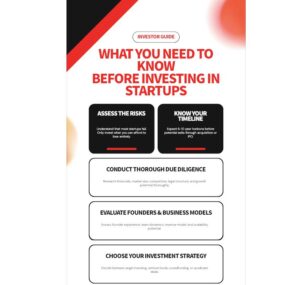
Startup investing is powerful, but it is not for everyone. It requires:
- Risk tolerance
- Long-term thinking
- Research skills
- Emotional discipline
When done correctly, it can deliver life-changing returns. When done carelessly, it can lead to total loss. The key is not to avoid startup investing—but to approach it with knowledge, strategy, and patience.
Startups are shaping the future of global business, from fintech revolutions in Africa to AI breakthroughs in Silicon Valley. But behind every success story are countless failed attempts and lessons learned.
At Afrokonnect, we believe financial growth should be built on knowledge, not hype. Whether you are an aspiring investor or simply exploring opportunities, understanding the fundamentals is the first step toward smart wealth building. The future belongs to those who take calculated risks—not blind ones.